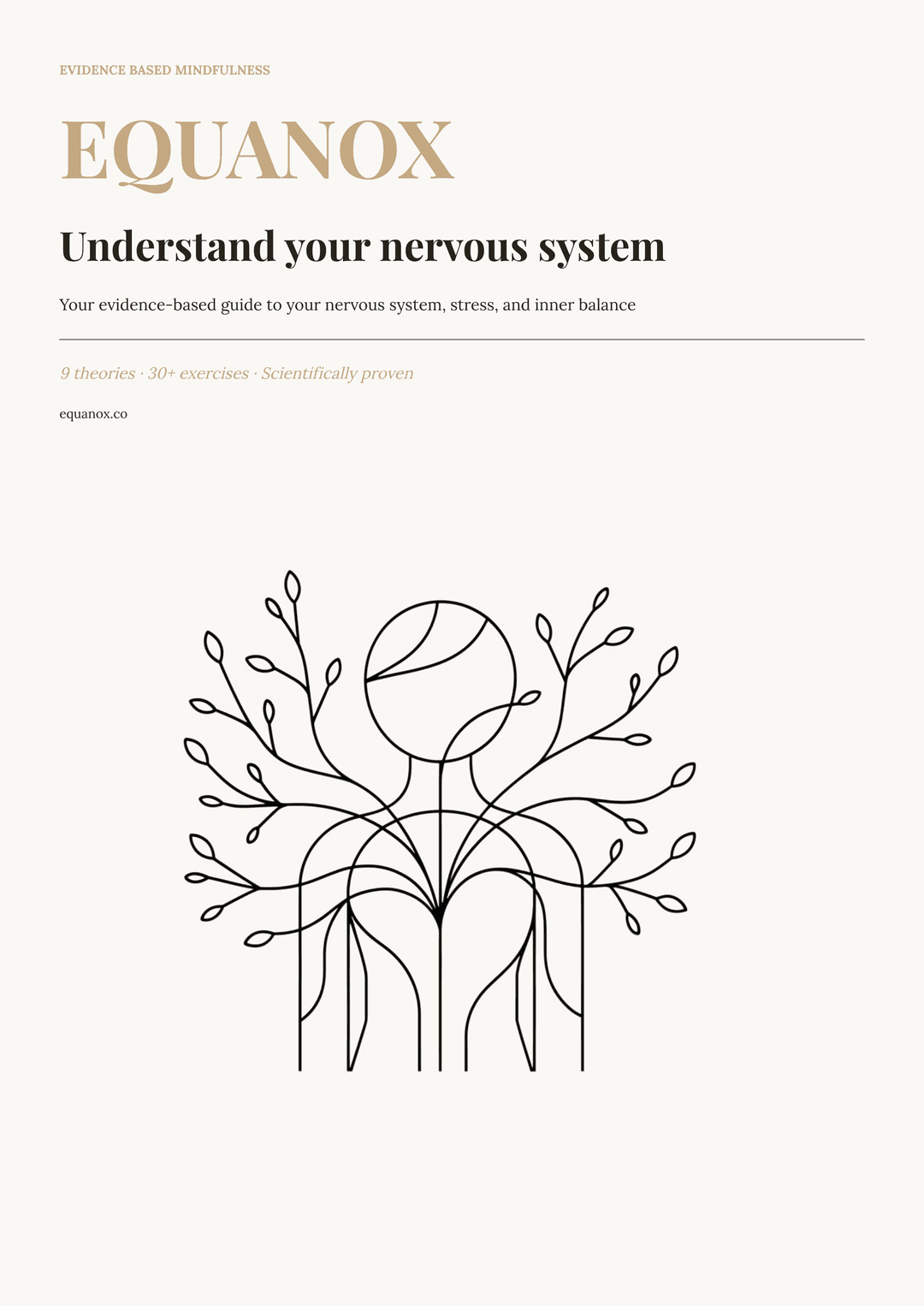
Understand your nervous system.
The complete guide to stress, anxiety, emotions and inner balance — across nine theories and more than 45 exercises.
Nine theories — one framework.
From polyvagal theory to schema therapy — the most important models of modern mindfulness, explained clearly and anchored in exercises.
Polyvagal theoryThree states of the nervous system.
How safety, fight-flight and freeze arise — and how to read your own state.
Stephen W. Porges · 1994MBSRMindfulness-Based Stress Reduction.
Body scan, sitting meditation, attention to the breath — the most-studied mindfulness program in the world.
Jon Kabat-Zinn · 1979DBTDialectical behavior therapy.
Widening the window of tolerance. Holding emotions without falling into them.
Marsha M. Linehan · 1993ACTAcceptance and commitment.
Defusion, cognitive flexibility, values-based action. Don't change thoughts — change your relationship to them.
Steven C. Hayes · 1986Self-compassionThe benevolent inner witness.
Why self-compassion works better than self-criticism — and how to practice it.
Neff & Gilbert · 2003CBTCognitive behavioral therapy.
Thoughts, emotions, behavior — and the connection between them. The foundation of many modern methods.
Aaron T. Beck · 1967MBCTMindfulness-Based Cognitive Therapy.
The fusion of MBSR and CBT. Particularly effective against depressive relapses.
Segal, Williams, Teasdale · 2002IFSInternal Family Systems.
Understanding inner parts — managers, firefighters, exiles — and bringing them into dialogue.
Richard C. Schwartz · 1995Schema therapyRecognizing early patterns.
How life-traps from childhood shape our adult life — and how they dissolve.
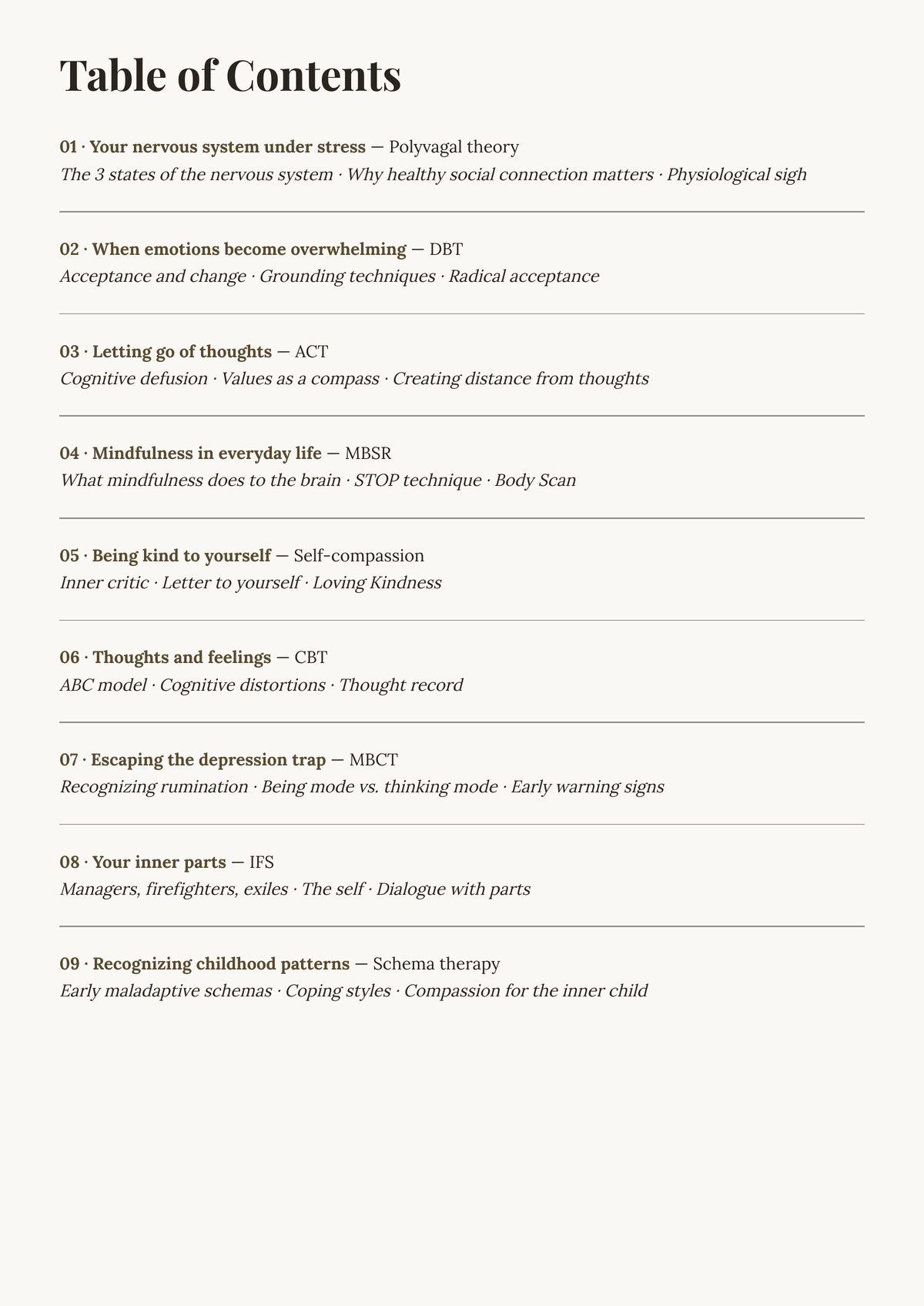
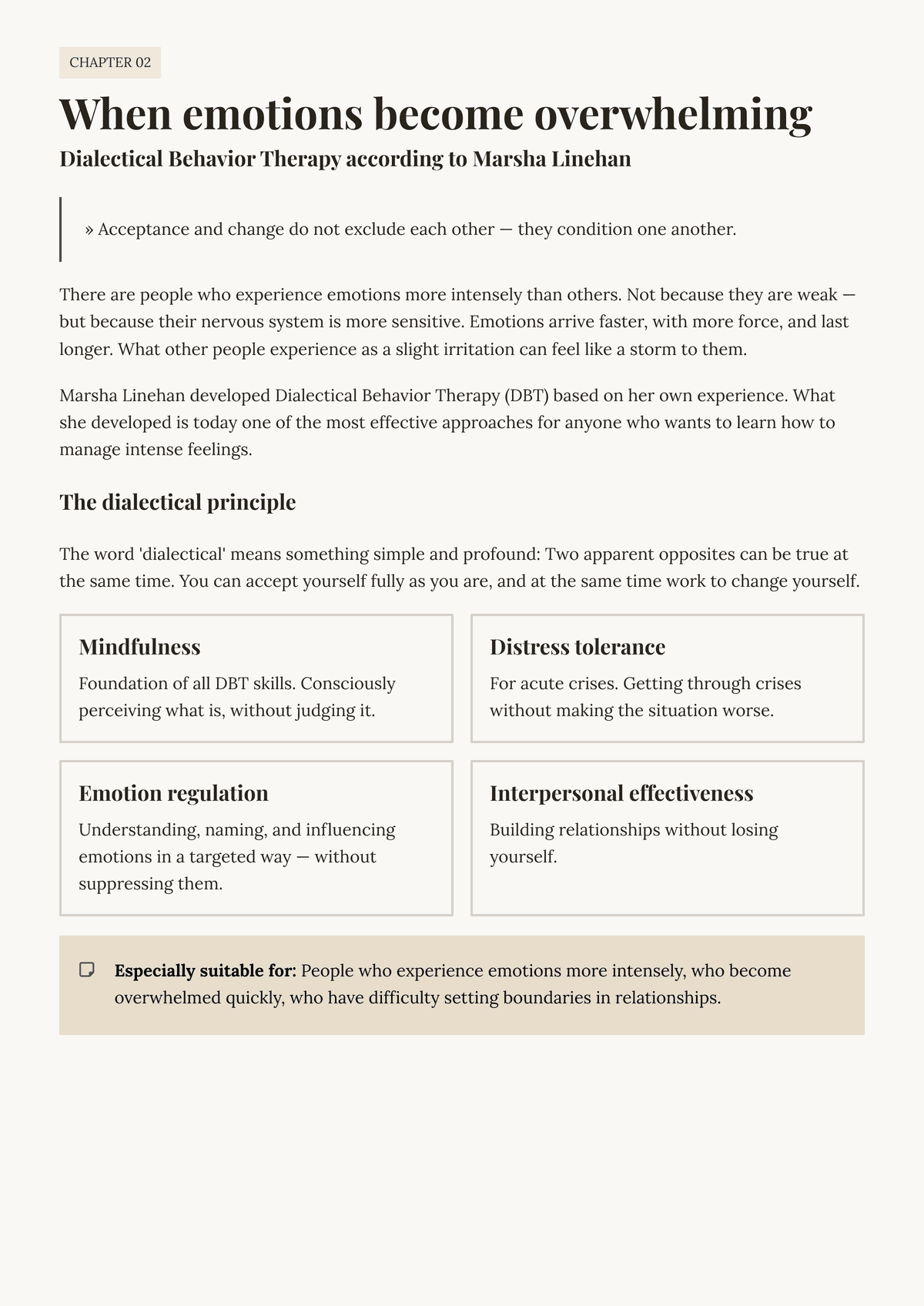
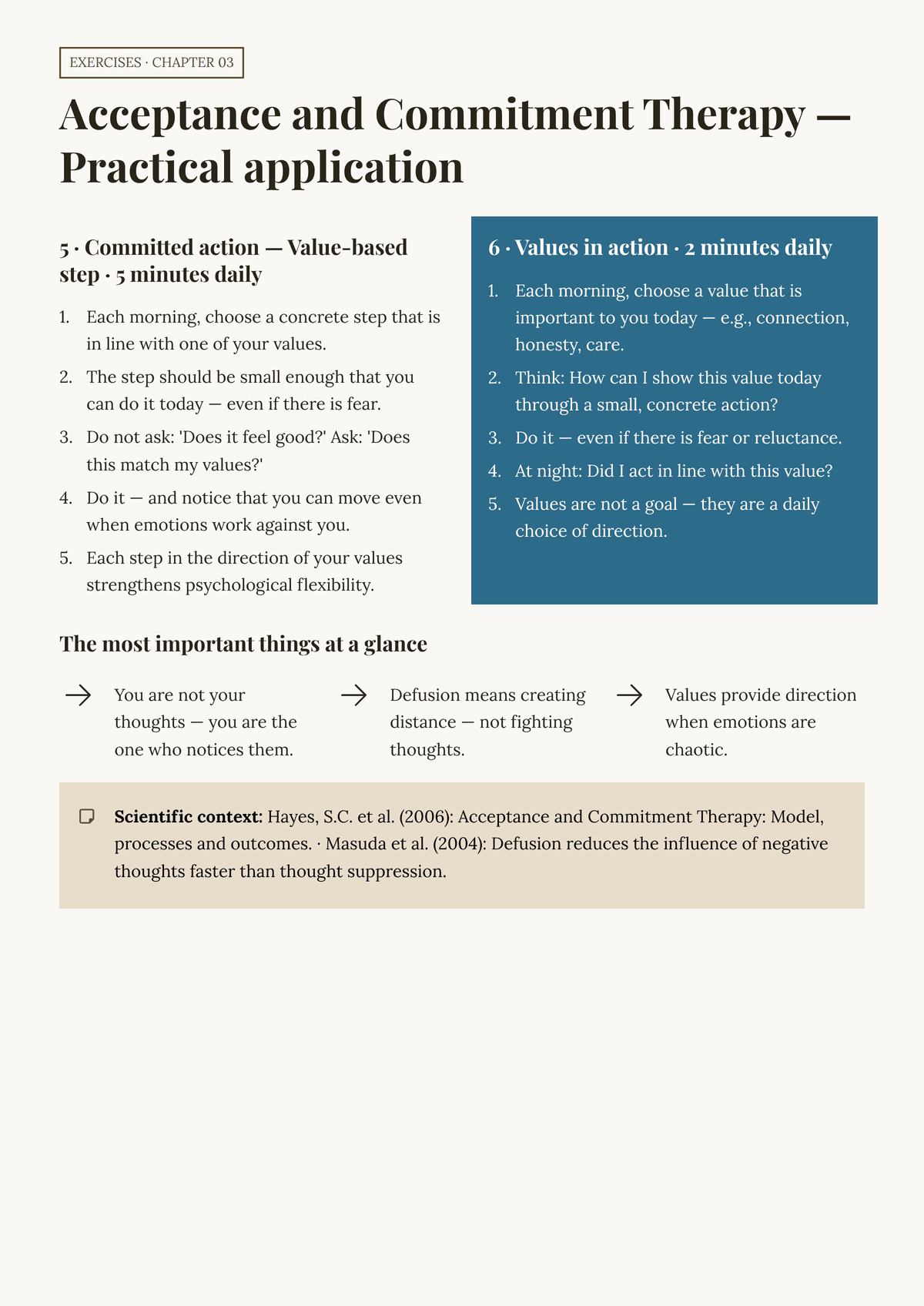
Jeffrey E. Young · 1990A look inside.
Four sample pages from the volume — table of contents, letter, two chapter excerpts. To get a feel before you buy.

Three profiles.
This volume isn't aimed at an abstract «audience» — but at three concrete situations in which people come to us.
The seeker of orientation.
You've heard a lot about mindfulness — but without a map. What is MBSR, what is ACT, what is polyvagal? You want to understand before you commit.
- Introduction to all the major methods
- Comparison of approaches
- Concrete recommendations
The quietly exhausted.
On the outside you function — but inside the battery is empty. Sleep no longer restores, joy is missing, you're looking for a path that doesn't shout therapy.
- Regulation from the body
- Exercises for everyday life
- No therapeutic obligation
The professionally curious.
You work with people (coaching, support, nursing, medicine) and want to understand the models — with sources and dates, not empty phrases.
- Scientifically grounded
- With primary sources
- Practically usable
Nine theories — evidence-based.
The nine models in this volume are backed with primary sources and publication years. No TikTok wisdom — what is taught at universities.
Single volume or the library.
Start with this volume — or take all six at a discounted price.
Understand your nervous system.
The flagship. The recommended starting point for the Equanox library — 128 pages, 9 theories, more than 45 exercises.
- Instant download as PDF
- DIN A5 — printable and digital
- One-time payment, no subscription
- No DRM, no signup
The Equanox library.
All six volumes in one bundle — 538 pages, nine methods, more than 60 exercises. A reference frame for the next years of your practice.
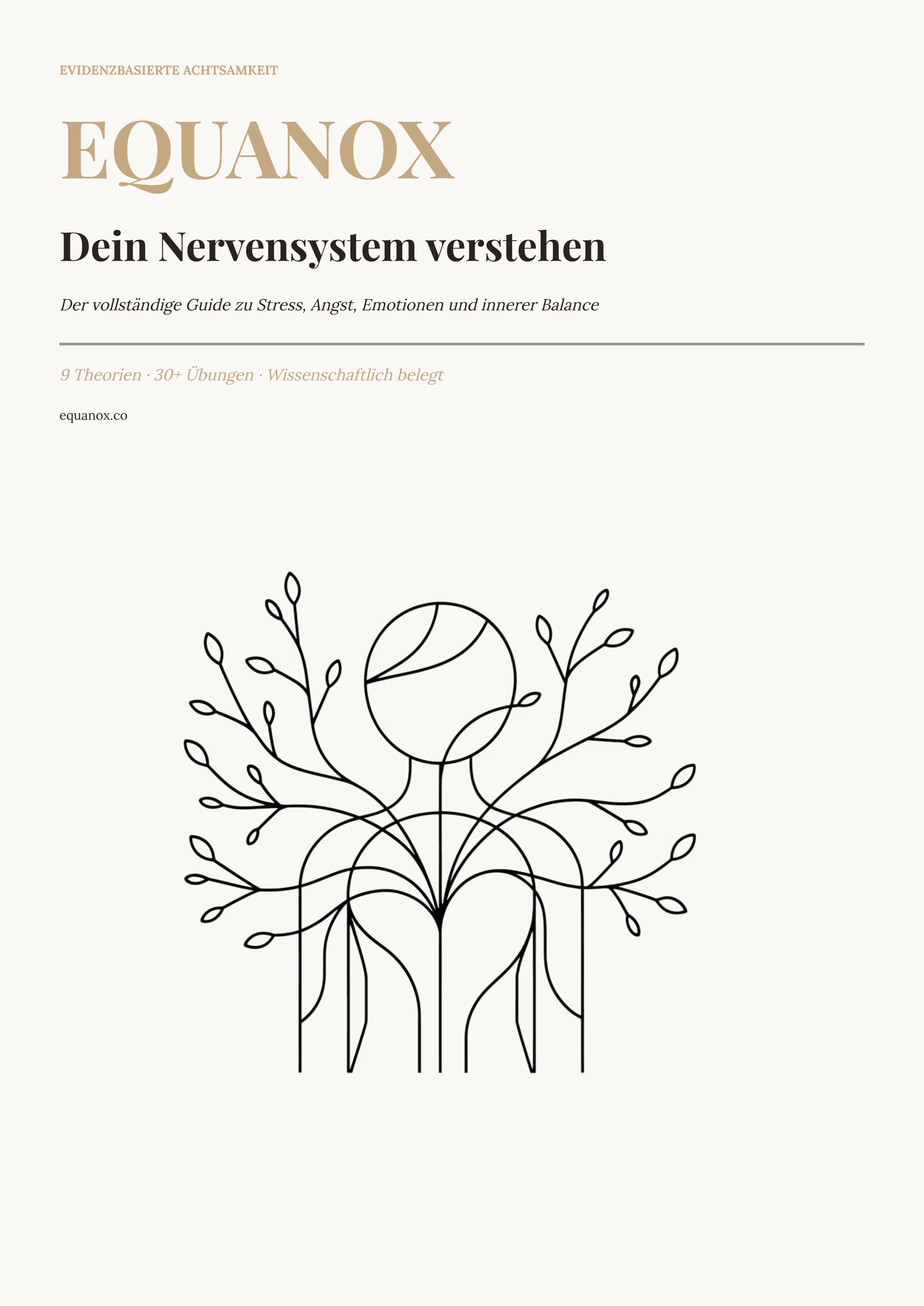
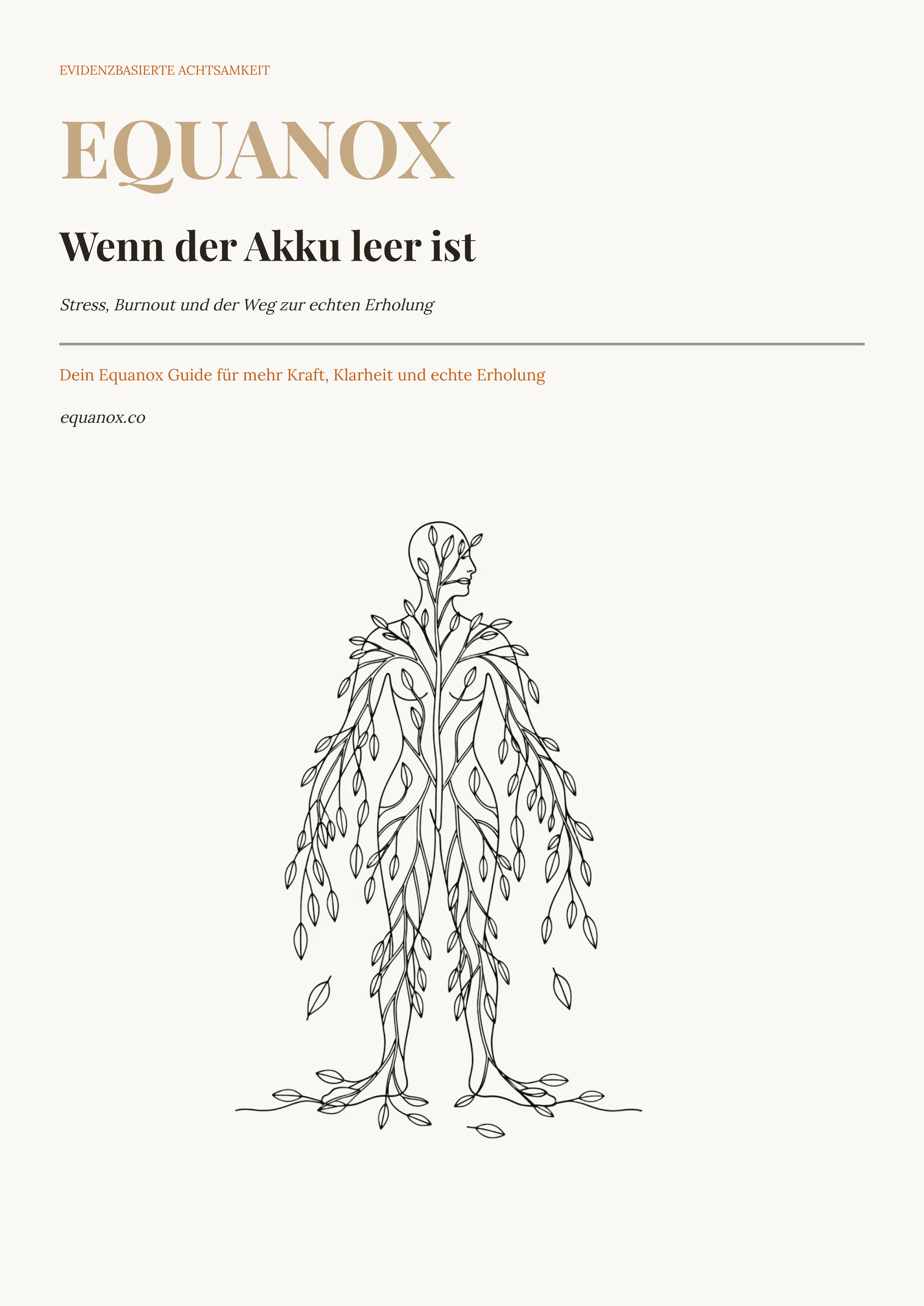
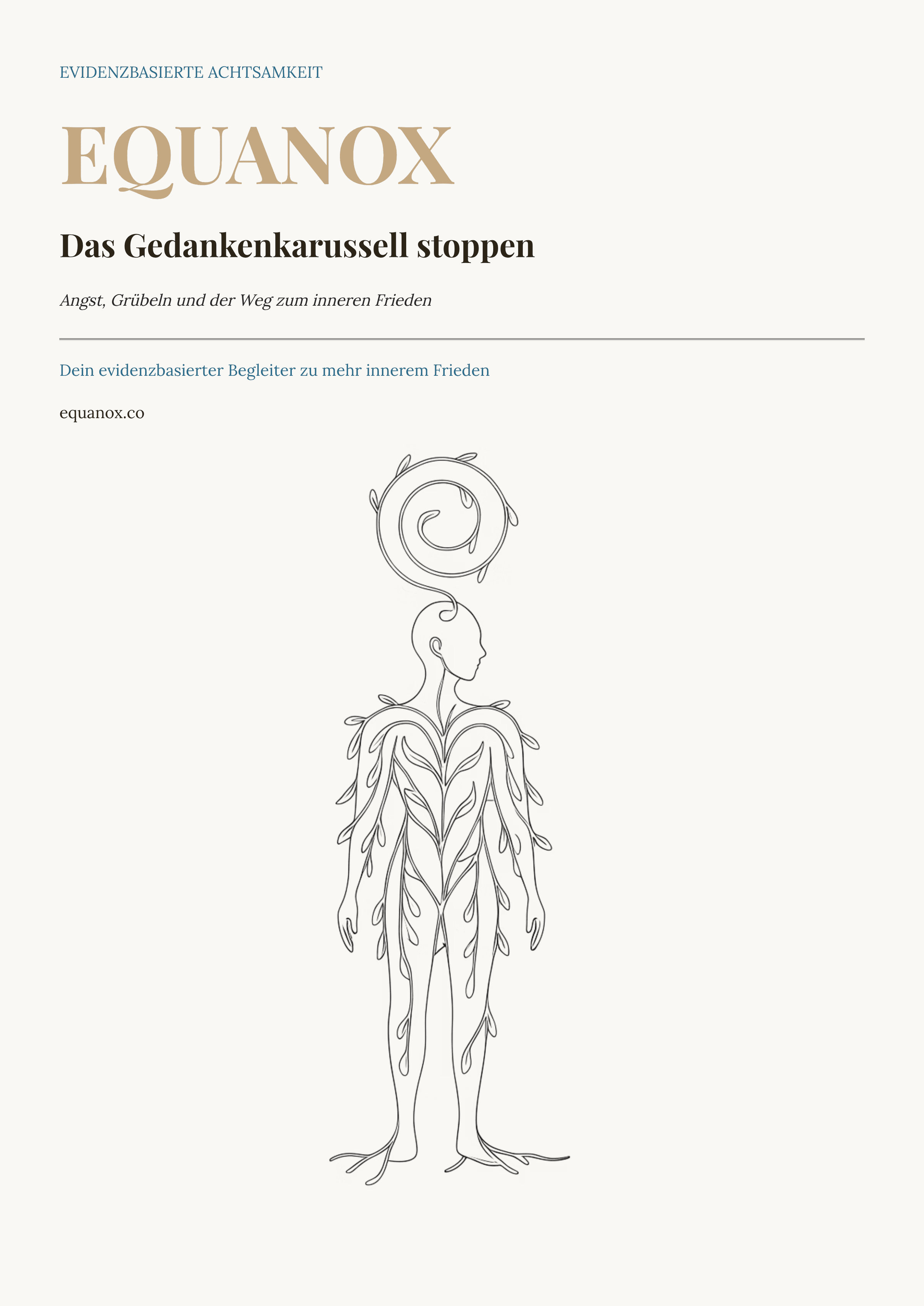
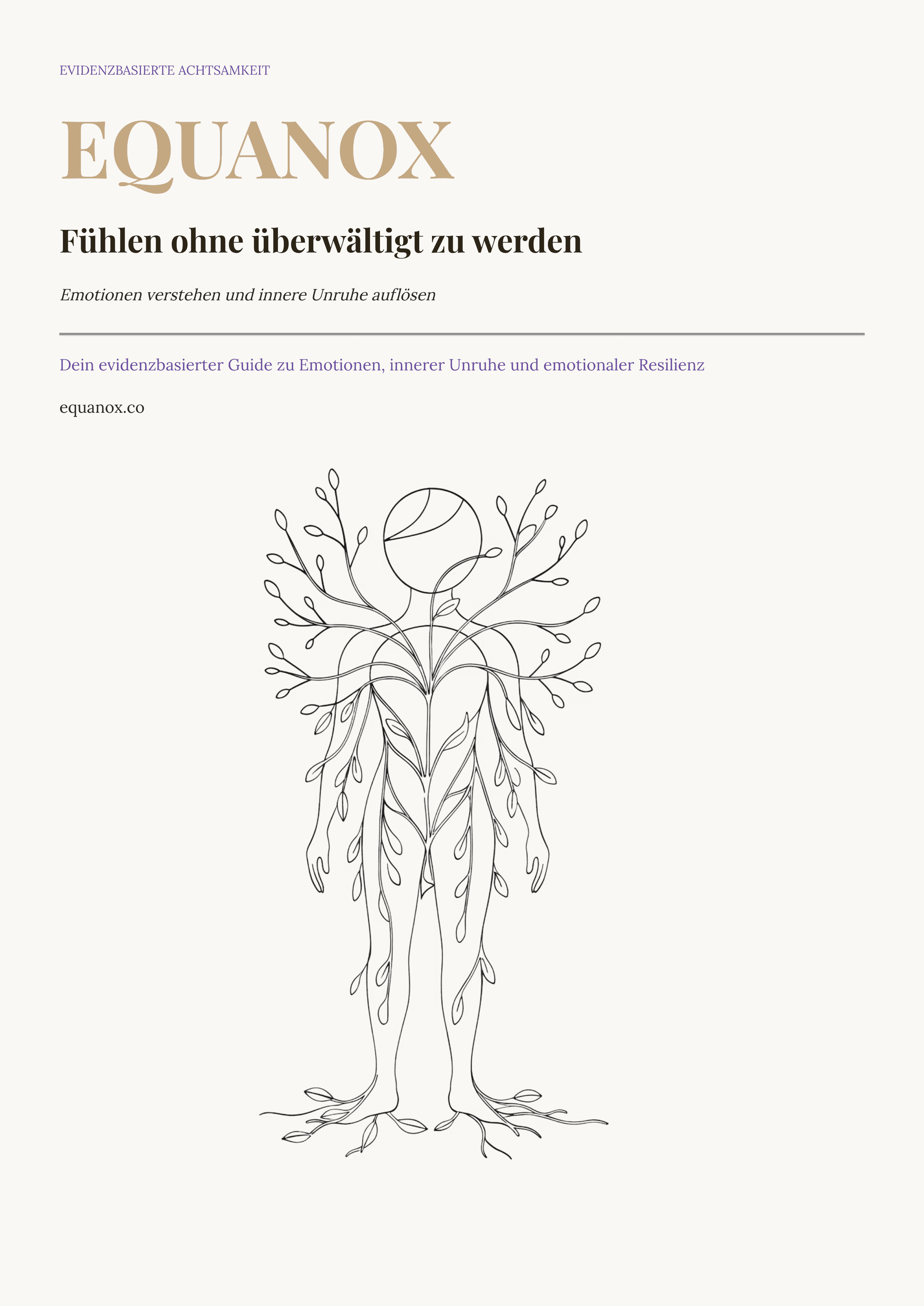
- All 6 volumes included
- No. 01 Nervous system · No. 02 Burnout · No. 03 Anxiety
- No. 04 Emotions · No. 05 Relationships · No. 06 Self-worth
- DRM-free, instantly available
What's next?
equanox.co no sustituye la atención profesional. Si estás en crisis, busca ayuda ahora.