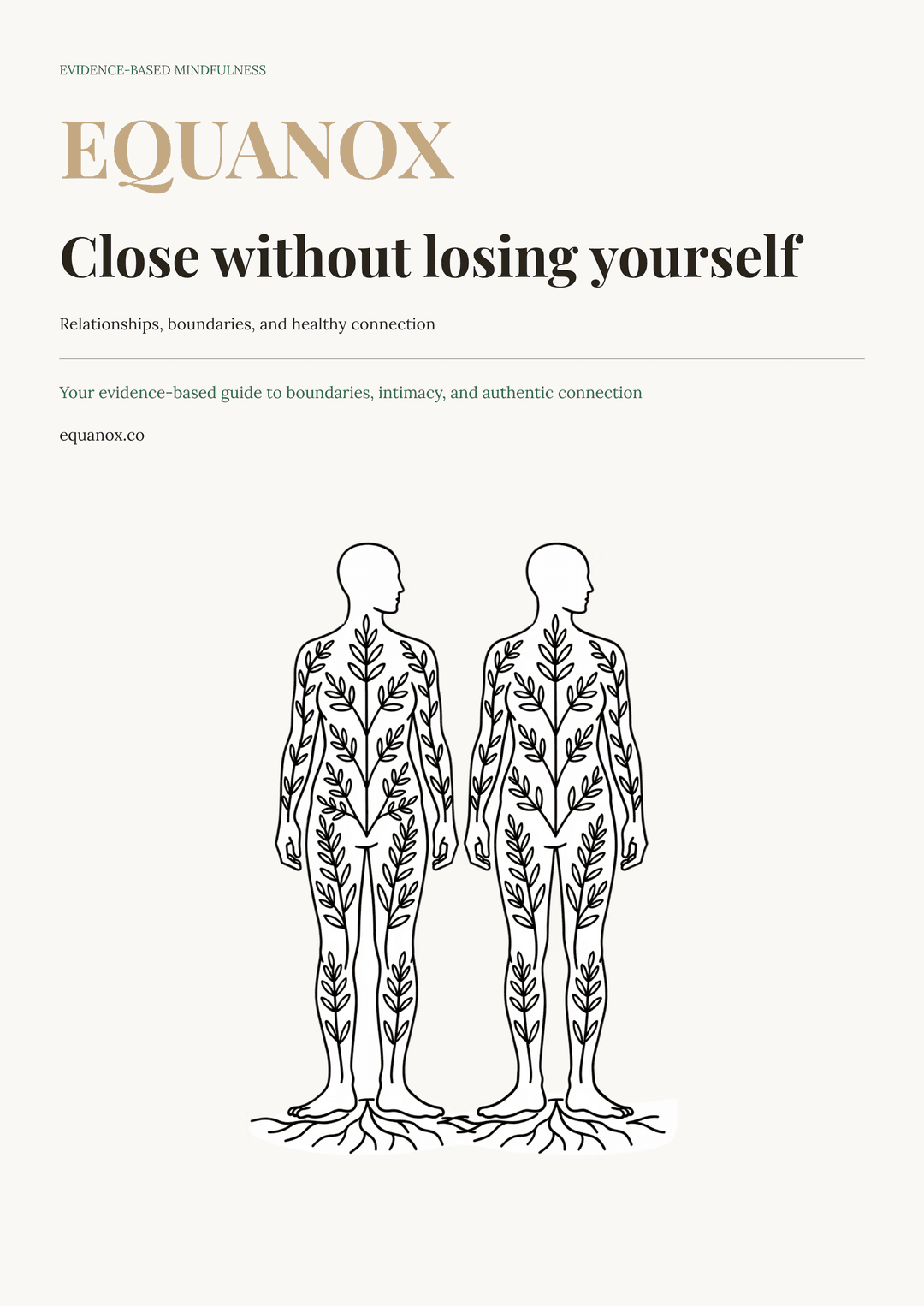
Close without losing yourself.
Attachment, boundaries and conscious communication — how polyvagal theory and IFS help to keep the relationship without losing your own center.
Six chapters — two poles.
From childhood attachment patterns to concrete communication tools — six chapters that think closeness and autonomy together.
Understanding attachment stylesThe foundation of your relationships.
Why you react the way you do — the scientific foundations of Bowlby's attachment theory.
When we lose ourselvesCodependency and people-pleasing.
The psychology behind over-giving — and the fear of rejection that lies behind it.
Setting boundariesClear, without being hard.
How to communicate clearly what you need — without putting the bond at risk. With sample phrasings.
Nonviolent communicationRosenberg's method.
Naming needs without reproach. Four steps applicable concretely.
Changing patternsConscious relationships.
How to recognize dynamics in partnership, friendship and family — and actively reshape them.
Closeness and autonomyHolding the balance.
How you can be close without losing yourself — finding a new equilibrium.
A look inside.
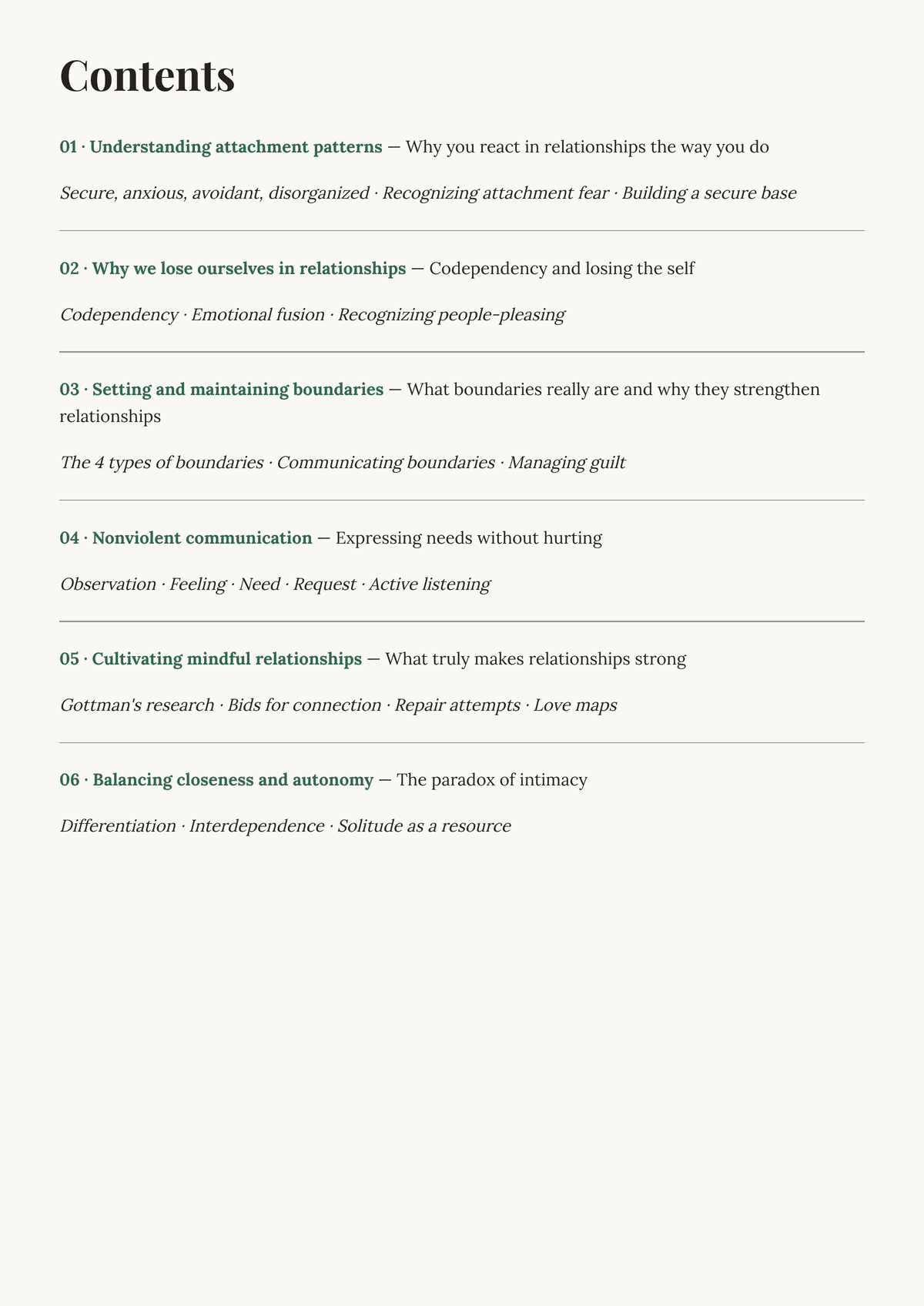
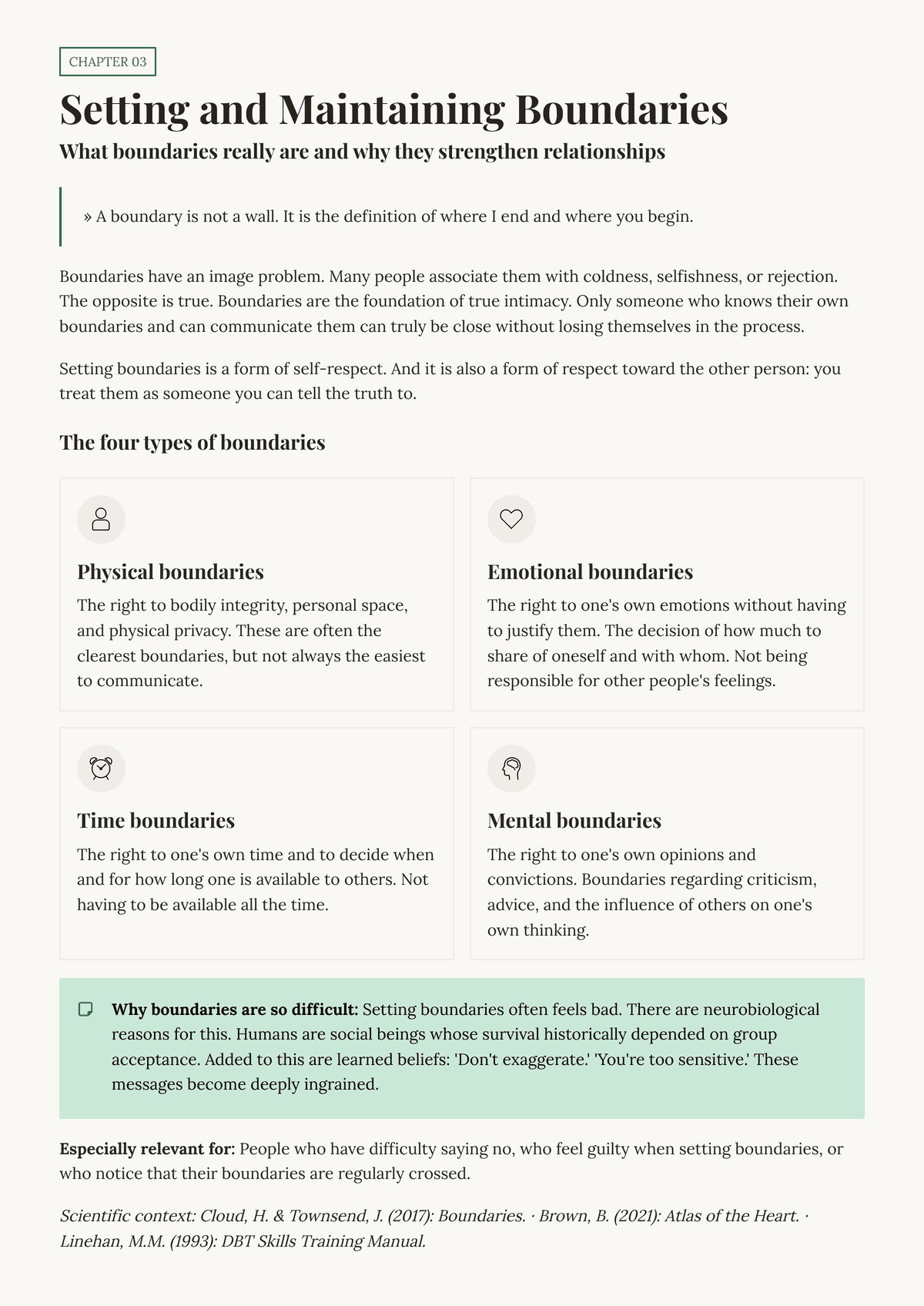
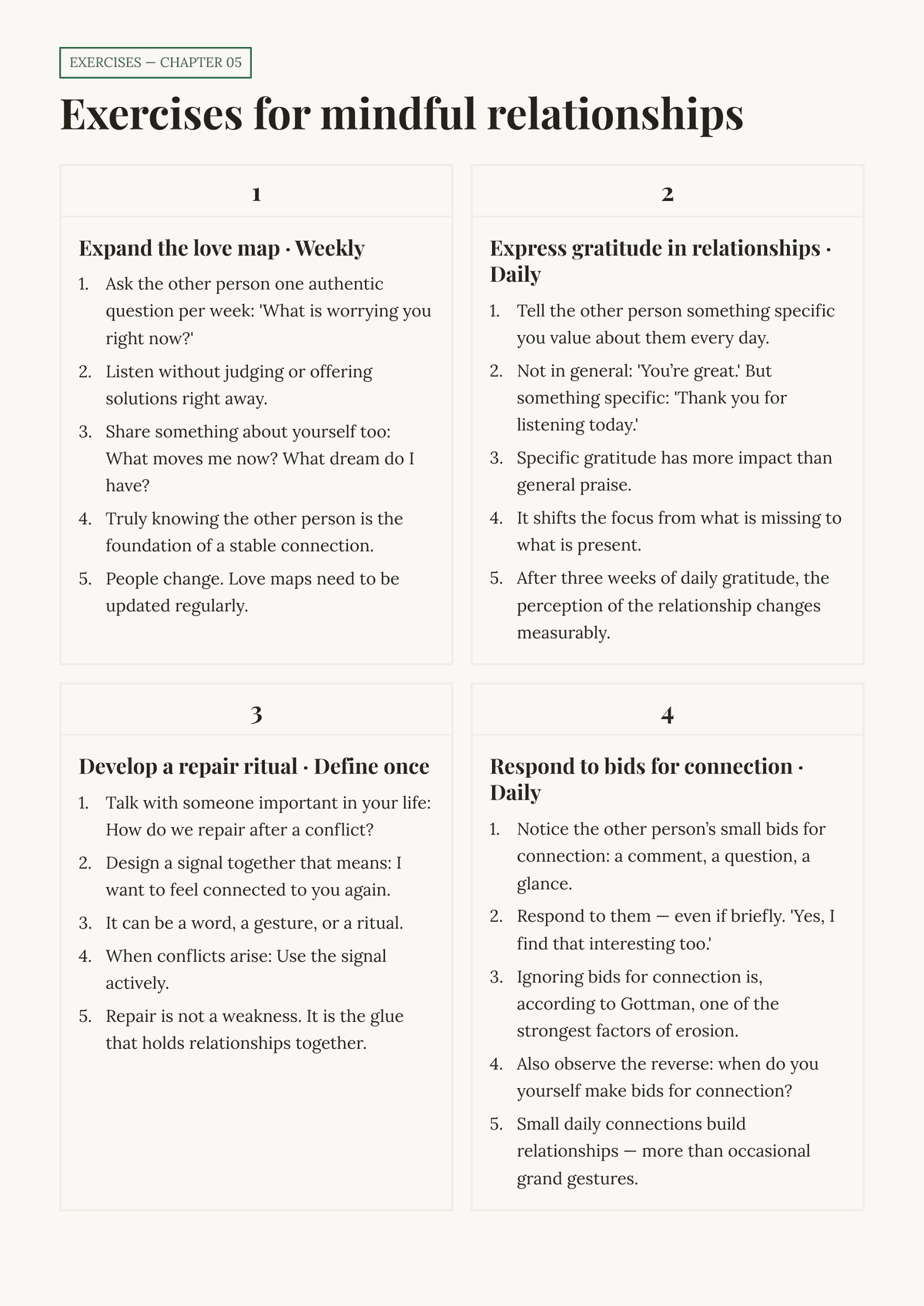
Four sample pages from the volume — table of contents, letter, two chapter excerpts. To get a feel before you buy.

Three profiles.
Three frequent patterns when people reach the limit in their relationships — and why the same principles help all of them.
The over-giver.
You give a lot in relationships — often too much. You say yes even when you think no. In the end you're exhausted and barely seen.
- Understanding people-pleasing
- Practicing boundaries
- Knowing IFS parts
The one who loses themself.
In close relationships, your contours blur. You take on others' opinions, needs and states — and in the end you don't know what you want.
- Strengthening autonomy
- Staying in contact with yourself
- Identity within the we
The pattern-recognizer.
You notice that certain relationship dynamics repeat — and you want to understand how to break them.
- Recognizing your attachment style
- Understanding your triggers
- Daring new patterns
Single volume or the library.
Start with this volume — or take all six at a discounted price.
Close without losing yourself.
The guide for attachment, boundaries and conscious communication. 80 pages, six chapters, with IFS and polyvagal as the foundation.
- Instant download as PDF
- DIN A5 — printable and digital
- One-time payment, no subscription
- No DRM, no signup
The Equanox library.
All six volumes in one bundle — 538 pages, nine methods, more than 60 exercises. A reference frame for the next years of your practice.

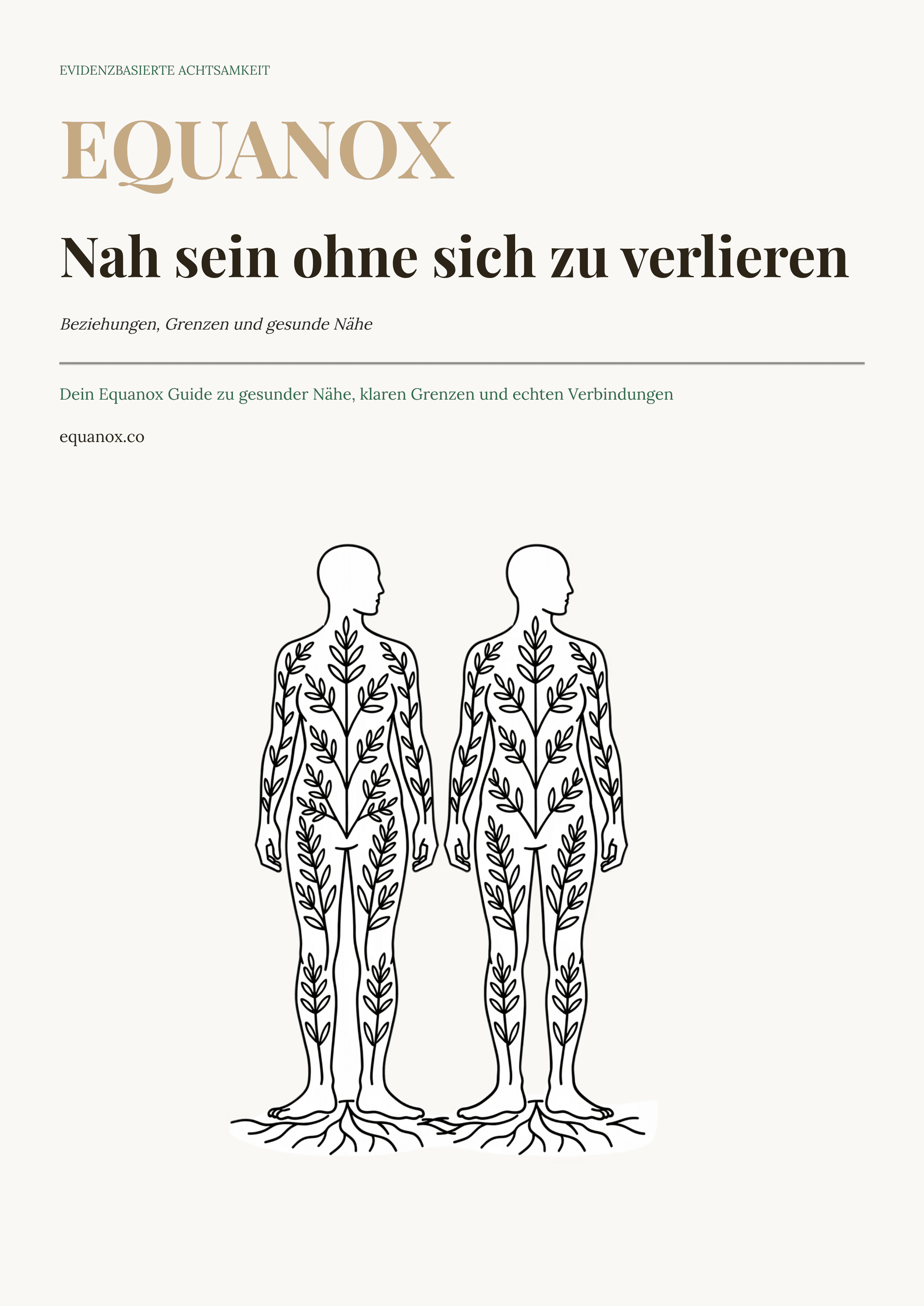
- All 6 volumes included
- No. 01 Nervous system · No. 02 Burnout · No. 03 Anxiety
- No. 04 Emotions · No. 05 Relationships · No. 06 Self-worth
- DRM-free, instantly available
What's next?
equanox.co no sustituye la atención profesional. Si estás en crisis, busca ayuda ahora.